A Portrait of the Artist as a Young Man خلاصه کوتاه فارسی

A Portrait of the Artist as a Young Man

By

James Joyce

Context

James Joyce was born on February 2, 1882, in the town of Rathgar, near Dublin, Ireland. He was the oldest of ten children born to a well-meaning but financially inept father and a solemn, pious mother. Joyce's parents managed to scrape together enough money to send their talented son to the Clongowes Wood College, a prestigious boarding school, and then to Belvedere College, where Joyce excelled as an actor and writer. Later, he attended University College in Dublin, where he became increasingly committed to language and literature as a champion of Modernism. In 1902, Joyce left the university and moved to Paris, but briefly returned to Ireland in 1903 upon the death of his mother. Shortly after his mother's death, Joyce began work on the story that would later become A Portrait of the Artist as a Young Man.


ادامه نوشته

Vanity Fair by William Makepeace Thackeray  رمان

Vanity Fair

William Makepeace Thackeray  

Book Summary

Amelia Sedley, of good family, and Rebecca Sharp, an orphan, leave Miss Pinkerton's academy on Chiswick Mall to live out their lives in Vanity Fair — the world of social climbing and search for wealth. Amelia does not esteem the values of Vanity Fair; Rebecca cares for nothing else.

 Rebecca first attempts to enter the sacred domain of Vanity Fair by inducing Joseph Sedley, Amelia's brother, to marry her. George Osborne, however, foils this plan; he intends to marry Amelia and does not want a governess for a sister-in-law. Rebecca takes a position as governess at Queen's Crawley, and marries Rawdon Crawley, second son of Sir Pitt Crawley. Because of his marriage, Rawdon's rich aunt disinherits him.

First introduced as a friend of George Osborne, William Dobbin becomes the instrument for getting George to marry Amelia, after George's father has forbidden the marriage on account of the Sedley's loss of fortune. Because of George's marriage, old Osborne disinherits him. Both young couples endeavor to live without sufficient funds. George dies at Waterloo. Amelia would have starved but for William Dobbin's anonymous contribution to her welfare. Joseph goes back to his post in India, claiming such valor at Waterloo that he earns the nickname "Waterloo Sedley." Actually he fled at the sound of the cannon. Both Rebecca and Amelia give birth to sons.

ادامه نوشته

Wuthering Heights by Emily Brontë همراه با لینک دانلود فیلم


Wuthering Heights

بلندی های بادگیر

Emily Brontë


Plot Overview

I n the late winter months of 1801, a man named Lockwood rents a manor house called Thrushcross Grange in the isolated moor country of England. Here, he meets his dour landlord, Heathcliff, a wealthy man who lives in the ancient manor of Wuthering Heights, four miles away from the Grange. In this wild, stormy countryside, Lockwood asks his housekeeper, Nelly Dean, to tell him the story of Heathcliff and the strange denizens of Wuthering Heights. Nelly consents, and Lockwood writes down his recollections of her tale in his diary; these written recollections form the main part of Wuthering Heights.

Nelly remembers her childhood. As a young girl, she works as a servant at Wuthering Heights for the owner of the manor, Mr. Earnshaw, and his family. One day, Mr. Earnshaw goes to Liverpool and returns home with an orphan boy whom he will raise with his own children. At first, the Earnshaw children—a boy named Hindley and his younger sister Catherine—detest the dark-skinned Heathcliff. But Catherine quickly comes to love him, and the two soon grow inseparable, spending their days playing on the moors. After his wife’s death, Mr. Earnshaw grows to prefer Heathcliff to his own son, and when Hindley continues his cruelty to Heathcliff, Mr. Earnshaw sends Hindley away to college, keeping Heathcliff nearby.

ادامه نوشته

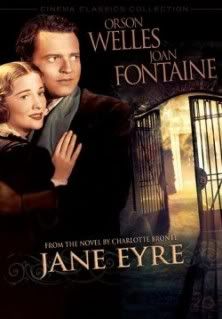
Jane Eyre by Charlotte Brontë دانلود فیلم و خلاصه رمان انگلیسی

Jane Eyre

دانلود رمان- فیلم

Charlotte Brontë


Charlotte Brontë was born in Yorkshire, England on April 21, 1816 to Maria Branwell and Patrick Brontë. Because Charlotte’s mother died when Charlotte was five years old, Charlotte’s aunt, a devout Methodist, helped her brother-in-law raise his children. In 1824 Charlotte and three of her sisters—Maria, Elizabeth, and Emily—were sent to Cowan Bridge, a school for clergymen’s daughters. When an outbreak of tuberculosis killed Maria and Elizabeth, Charlotte and Emily were brought home. Several years later, Charlotte returned to school, this time in Roe Head, England. She became a teacher at the school in 1835 but decided after several years to become a private governess instead. She was hired to live with and tutor the children of the wealthy Sidgewick family in 1839, but the job was a misery to her and she soon left it. Once Charlotte recognized that her dream of starting her own school was not immediately realizable, however, she returned to working as a governess, this time for a different family. Finding herself equally disappointed with governess work the second time around, Charlotte recruited her sisters to join her in more serious preparation for the establishment of a school.

Although the Brontës’ school was unsuccessful, their literary projects flourished. At a young age, the children created a fictional world they named Angria, and their many stories, poems, and plays were early predictors of shared writing talent that eventually led Emily, Anne, and Charlotte to careers as novelists. As adults, Charlotte suggested that she, Anne, and Emily collaborate on a book of poems. The three sisters published under male pseudonyms: Charlotte’s was Currer Bell, while Emily and Anne wrote as Ellis and Acton Bell, respectively. When the poetry volume received little public notice, the sisters decided to work on separate novels but retained the same pseudonyms. Anne and Emily produced their masterpieces in 1847, but Charlotte’s first book, The Professor, never found a willing publisher during her lifetime. Charlotte wrote Jane Eyre later that year. The book, a critique of Victorian assumptions about gender and social class, became one of the most successful novels of its era, both critically and commercially.

ادامه نوشته

To the Lighthouse خلاصه رمان

To the Lighthouse

by Virginia Woolf


Plot Overview

“The Window” opens just before the start of World War I. Mr. Ramsay and Mrs. Ramsay bring their eight children to their summer home in the Hebrides (a group of islands west of Scotland). Across the bay from their house stands a large lighthouse. Six-year-old James Ramsay wants desperately to go to the lighthouse, and Mrs. Ramsay tells him that they will go the next day if the weather permits. James reacts gleefully, but Mr. Ramsay tells him coldly that the weather looks to be foul. James resents his father and believes that he enjoys being cruel to James and his siblings.

The Ramsays host a number of guests, including the dour Charles Tansley, who admires Mr. Ramsay’s work as a metaphysical philosopher. Also at the house is Lily Briscoe, a young painter who begins a portrait of Mrs. Ramsay. Mrs. Ramsay wants Lily to marry William Bankes, an old friend of the Ramsays, but Lily resolves to remain single. Mrs. Ramsay does manage to arrange another marriage, however, between Paul Rayley and Minta Doyle, two of their acquaintances.


ادامه نوشته

The Great Gatsby خلاصه و دانلود فیلم

The Great Gatsby

دانلود فیلم

F. Scott Fitzgerald


Context

F RANCIS SCOTT KEY FITZGERALD WAS BORN on September 24, 1896, and named after his ancestor Francis Scott Key, the author of “The Star-Spangled Banner.” Fitzgerald was raised in St. Paul, Minnesota. Though an intelligent child, he did poorly in school and was sent to a New Jersey boarding school in 1911. Despite being a mediocre student there, he managed to enroll at Princeton in 1913. Academic troubles and apathy plagued him throughout his time at college, and he never graduated, instead enlisting in the army in 1917, as World War I neared its end.

Fitzgerald became a second lieutenant, and was stationed at Camp Sheridan, in Montgomery, Alabama. There he met and fell in love with a wild seventeen-year-old beauty named Zelda Sayre. Zelda finally agreed to marry him, but her overpowering desire for wealth, fun, and leisure led her to delay their wedding until he could prove a success. With the publication of This Side of Paradise in 1920, Fitzgerald became a literary sensation, earning enough money and fame to convince Zelda to marry him.

ادامه نوشته

Mrs. Dalloway by Virginia Woolf

Mrs. Dalloway

by Virginia Woolf

Plot Overview

Mrs. Dalloway covers one day from morning to night in one woman’s life. Clarissa Dalloway, an upper-class housewife, walks through her London neighborhood to prepare for the party she will host that evening. When she returns from flower shopping, an old suitor and friend, Peter Walsh, drops by her house unexpectedly. The two have always judged each other harshly, and their meeting in the present intertwines with their thoughts of the past. Years earlier, Clarissa refused Peter’s marriage proposal, and Peter has never quite gotten over it. Peter asks Clarissa if she is happy with her husband, Richard, but before she can answer, her daughter, Elizabeth, enters the room. Peter leaves and goes to Regent’s Park. He thinks about Clarissa’s refusal, which still obsesses him.

The point of view then shifts to Septimus, a veteran of World War I who was injured in trench warfare and now suffers from shell shock. Septimus and his Italian wife, Lucrezia, pass time in Regent’s Park. They are waiting for Septimus’s appointment with Sir William Bradshaw, a celebrated psychiatrist. Before the war, Septimus was a budding young poet and lover of Shakespeare; when the war broke out, he enlisted immediately for romantic patriotic reasons. He became numb to the horrors of war and its aftermath: when his friend Evans died, he felt little sadness. Now Septimus sees nothing of worth in the England he fought for, and he has lost the desire to preserve either his society or himself. Suicidal, he believes his lack of feeling is a crime. Clearly Septimus’s experiences in the war have permanently scarred him, and he has serious mental problems. However, Sir William does not listen to what Septimus says and diagnoses “a lack of proportion.” Sir William plans to separate Septimus from Lucrezia and send him to a mental institution in the country.

ادامه نوشته

Tess of the d’Urbervilles by Thomas Hardy خلاصه فارسی و دانلود فیلم

Tess of the d’Urbervilles

رمان تس نویسنده توماس هاردی

Thomas Hardy

full title  ·  Tess of the d’Urbervilles

author  · Thomas Hardy

type of work  · Novel

genre  · Victorian, tragic

language  · English

time and place written  ·  1880s, England

date of first publication  ·  1891

publisher  · Random House, but also published serially in different periodicals

narrator  · Anonymous

point of view  · The narrator speaks in the third person, and looks deep into the characters’ minds. The narrator is objective but has an omniscient understanding of future implications of characters’ actions as they happen.

tone  · Realistic, pessimistic

tense  · Past

ادامه نوشته

Literal terms

Literal terms

AUTOBIOGRAPHY: A non-fictional account of a person's life--usually a celebrity, an important historical figure, or a writer--written by that actual person.

BIOGRAPHY: an account of a person's lif, non-fictional in nature. Modern biographies tend to be scrupulously accurate, at least as regards events. Early biographies were often written to augment or support a particular line of thought, and so the moral of a person's life became more important than the life itself.

Flashback:  a technique whereby the author interrupts the main narrative to relate events that took place at some time preceding the main narrative.

GOTHIC NOVEL: A type of romance wildly popular between 1760 up until the 1820s that has influenced the ghost story and horror story. The stories are designed to thrill readers by providing mystery and blood-curdling accounts of villainy, murder, and the supernatural. The term Gothic originally was applied to a tribe of Germanic barbarians during the dark ages. The first and the best  known early example is Horace Walpole's The Castle of Otranto. Mary Shelley's Frankenstein.

ادامه نوشته

Lord of the Flies by William Golding

Lord of the Flies

William Golding

summary

Chapter 1

A fair-haired boy lowers himself down some rocks toward a lagoon on a beach. At the lagoon, he encounters another boy, who is chubby, intellectual, and wears thick glasses. The fair-haired boy introduces himself as Ralph and the chubby one introduces himself as Piggy. Through their conversation, we learn that in the midst of a war, a transport plane carrying a group of English boys was shot down over the ocean. It crashed in thick jungle on a deserted island. Scattered by the wreck, the surviving boys lost each other and cannot find the pilot.

ادامه نوشته

دانلود فیلم Lord of the Flies


دانلود فیلم

Lord of the Flies (1990)

بر اساس رمان سالار مگس ها

رمان lord of flies

ادامه نوشته

The Old Man and the Sea  خلاصه رمان و...

The Old Man and the Sea

 By Ernest Hemingway  (1899-1961)


Summary


Santiago, an old fisherman, has gone eighty-four days without catching a fish. For the first forty days, a boy named Manolin had fished with him, but Manolin's parents, who call Santiago salao, or “the worst form of unlucky,” forced Manolin to leave him in order to work in a more prosperous boat. The old man is -wrinkled, splotched, and scarred from handling heavy fish on cords, but his eyes, which are the color of the sea, remain “cheerful and undefeated.”

 Having made some money with the successful fishermen, the boy offers to return to Santiago's skiff, reminding him of their previous eighty-seven-day run of bad luck, which culminated in their catching big fish every day for three weeks. He talks with the old man as they haul in Santiago's fishing gear and laments that he was forced to obey his father, who lacks faith and, as a result, made him switch boats. The pair stops for a beer at a terrace café, where fishermen make fun of Santiago. The old man does not mind. Santiago and Manolin reminisce about the many years the two of them fished together, and the boy begs the old man to let him provide fresh bait fish for him. The old man accepts the gift with humility. Santiago announces his plans to go “far out” in the sea the following day.

 Manolin and Santiago haul the gear to the old man's shack, which is furnished with nothing more than the barest necessities: a bed, a table and chair, and a place to cook. On the wall are two pictures: one of the Sacred Heart of Jesus and one of the Virgin of Cobre, the patroness of Cuba. The old man has taken down the photograph of his wife, which made him “too lonely.” The two go through their usual dinner ritual, in which the boy asks Santiago what he is going to eat, and the old man replies, “yellow rice with fish,” and then offers some to the boy. The boy declines, and his offer to start the old man's fire is rejected. In reality, there is no food.

ادامه نوشته